


“What size trailer do I need?” is the question we answer most often at our lot in Burns — and it comes up hardest in the fall. Between harvest, leaf and brush cleanup, firewood runs, hunting season, and a calendar full of outdoor events, a lot of folks in Middle Tennessee discover in October that the trailer they own is not the trailer the job needs.
This guide walks through how to size a trailer to the load, which type fits each fall job, and the one number that trips up more buyers than anything else. If you would rather just talk it through, call us at 615-794-9545 — we do this every day.
In This Guide
Start With a Pre-Season Service Check
If your trailer sat through most of the summer, assume something needs attention. The five things worth checking before the first heavy fall haul:
- Tires: check pressure cold, and look at the sidewalls, not just the tread. Trailer tires often age out before they wear out — dry rot and cracking are what strand people.
- Bearings and hubs: spin each wheel and listen. Roughness, play, or a hub that runs hot after a short drive means service before the season, not during it.
- Brakes: test them at low speed before you load up. Electric brakes that sat all summer can corrode, and a controller that worked in May may need adjusting under a heavier fall load.
- Lights and wiring: run every function — running lights, brake, both turn signals. Corroded connectors are the most common failure and the easiest to fix cheaply.
- Coupler, chains, and deck: check the coupler latch and safety chains for wear, and walk the deck for soft spots or loose boards.
If anything on that list gives you pause, our in-house service team handles brakes, bearings, wiring, decking, and parts — and fall is the season to get in front of it rather than behind it.
What Size Trailer Do I Need for Each Fall Job?
Fall work is not one job — it is five or six different ones, and they do not all want the same trailer.
Leaf, brush, and landscape cleanup
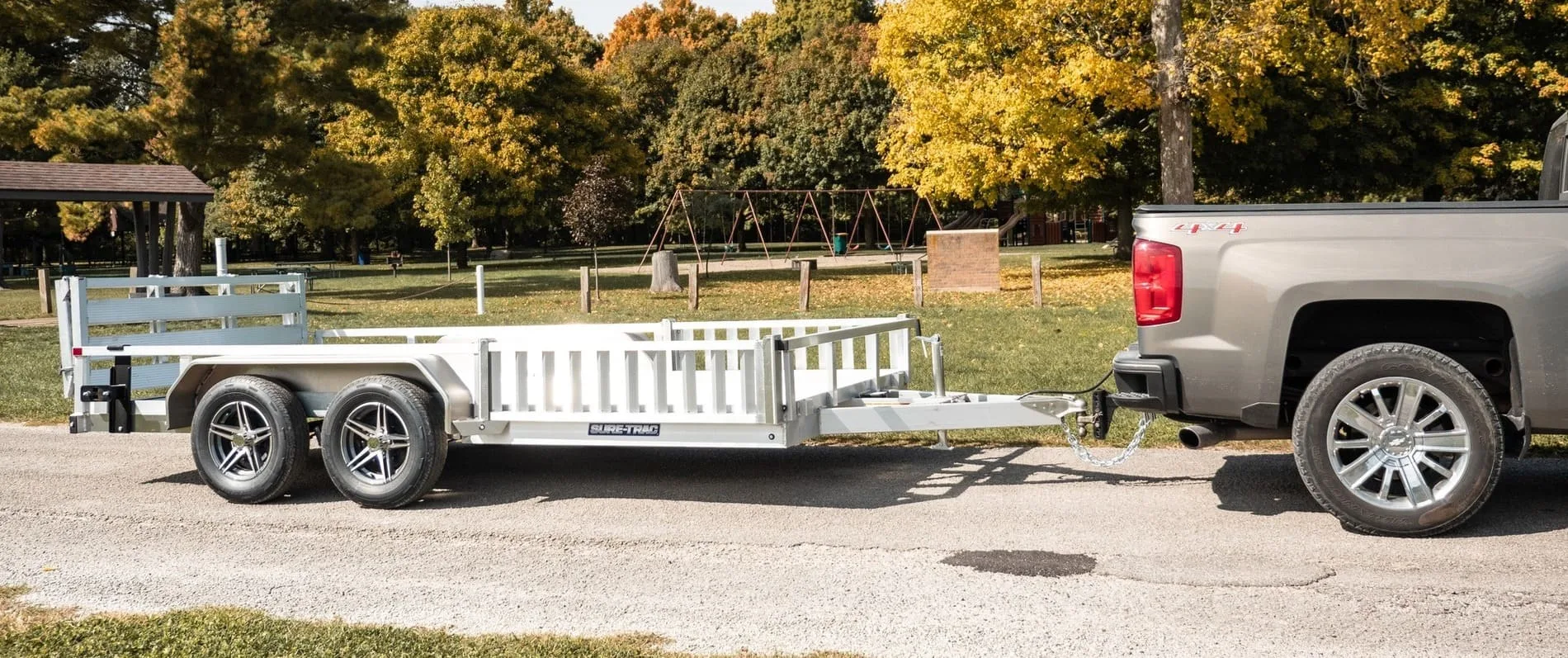
High-side landscape trailers are built for exactly this: light, bulky loads that would blow out of a low-side deck. If you are also moving mowers and equipment between properties, an open utility trailer covers both jobs.
Firewood, gravel, and material hauling
This is dump trailer territory. Anything you would otherwise unload by hand — split wood, gravel, mulch, cleanup debris — is worth the hydraulics. Hand-unloading a cord of wood gets old by the second load.
Harvest and farm equipment
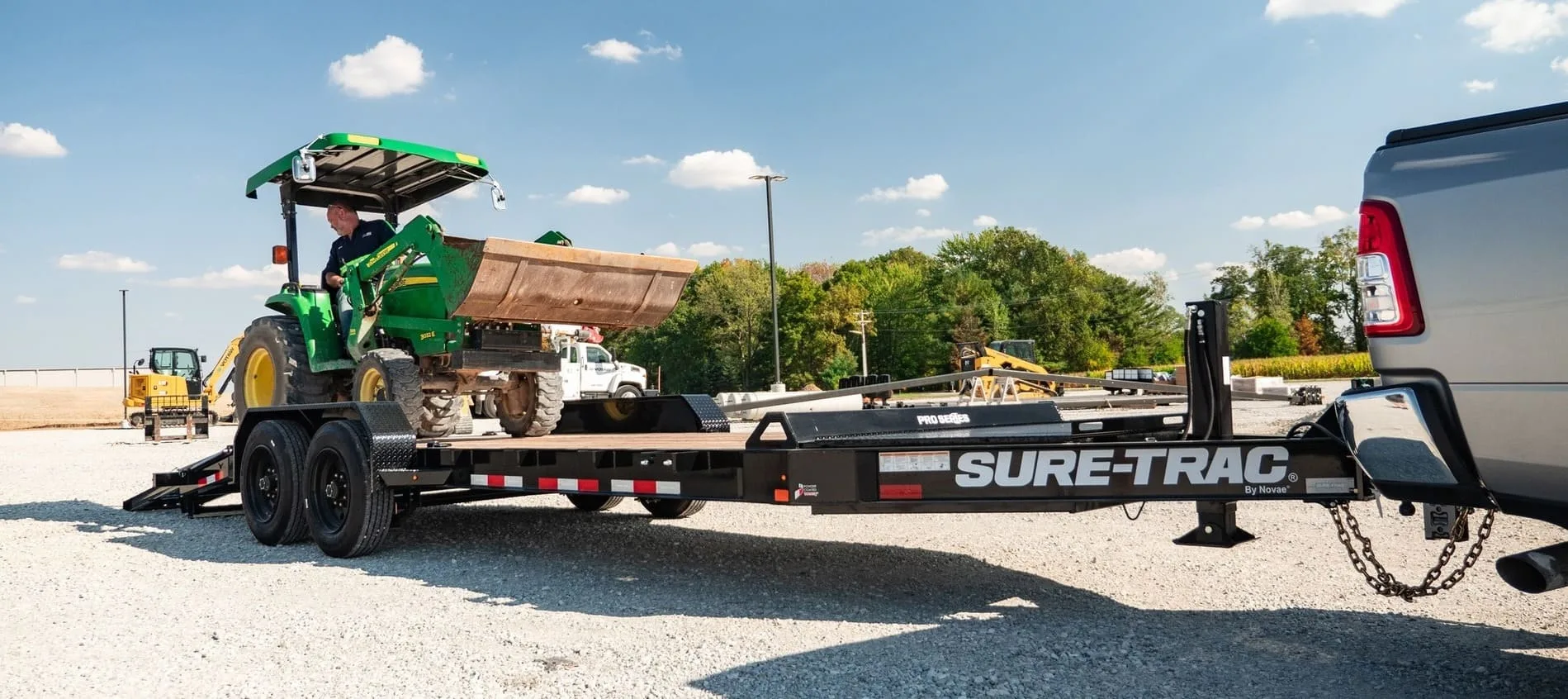
Moving tractors, implements, and attachments between fields calls for an equipment trailer with the deck and axle capacity to match. Tilt decks earn their keep here, since you are loading and unloading repeatedly rather than once.
Hunting season
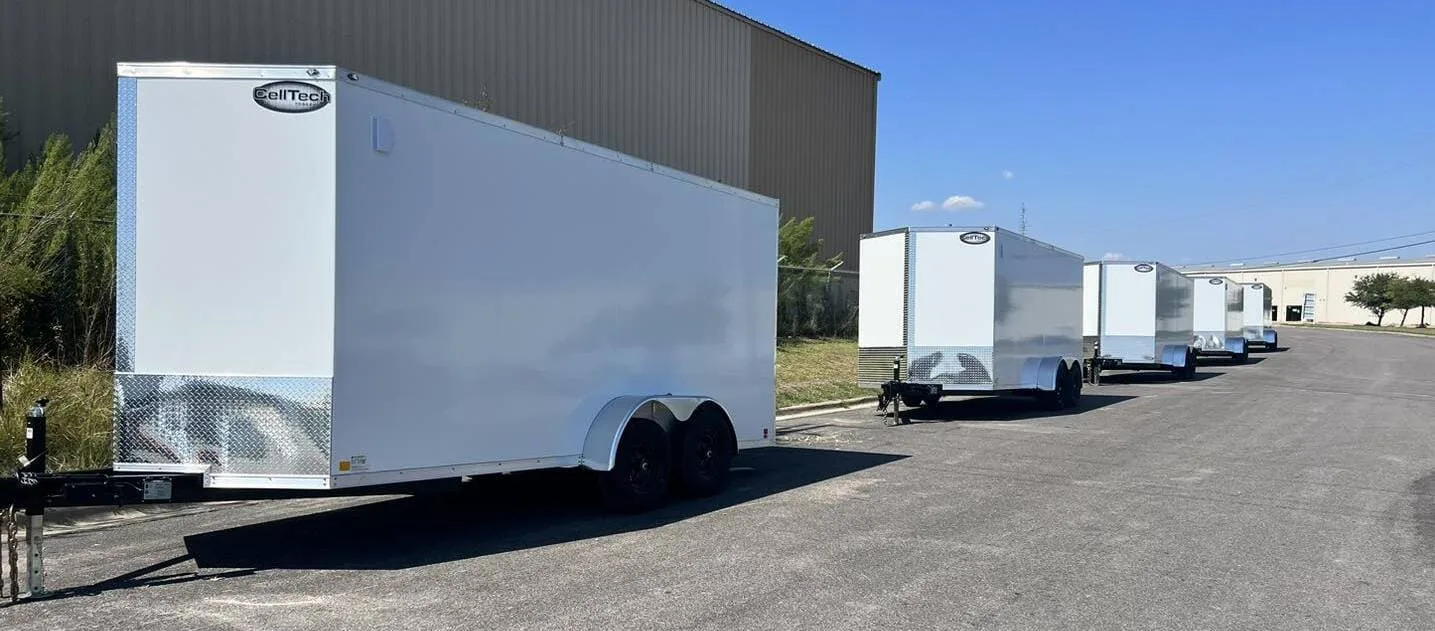
Side-by-sides, ATVs, gear, and game all travel well on a utility trailer, though an enclosed trailer is worth considering if you are leaving equipment loaded overnight at camp or hauling in bad weather.
Fall festivals and outdoor events
Event season runs hard through the fall in Middle Tennessee. Vendors lean on mobile kitchen and concession trailers, organizers need restroom trailers on site, and refrigerated trailers handle cold storage when the venue has none. If you only need cold space for a weekend, ask about refrigerated trailer rentals rather than buying.
How to Size a Trailer: The Number Most People Get Wrong
Every fall we talk to someone who bought on GVWR and ran out of trailer.
GVWR is the most the trailer can weigh fully loaded — including the trailer itself. Payload is what you can actually put on it. A trailer rated at 14,000 lb GVWR that weighs 4,000 lbs empty gives you roughly 10,000 lbs of usable payload. Size to payload, not GVWR.
Fall loads make this bite harder than summer ones, because so much of the work is dense. Green wood is heavier than seasoned. Wet leaves and soil weigh far more than dry. A cubic yard of gravel runs a couple of tons on its own. A trailer can be at its weight limit long before the bed looks full — and your tow vehicle’s rating matters just as much as the trailer’s.
Not sure which size fits?
Tell us what you tow with and what you haul, and we will size it with you — no guesswork. Call 615-794-9545 or send us a message. Family owned in Burns, TN since 1932.
Cold Mornings, Wet Decks, and Shorter Days
Tennessee falls swing hard between warm afternoons and cold mornings, and trailers notice. Tire pressure drops roughly 1 PSI for every 10°F the temperature falls, so a trailer aired up on an 85°F afternoon can be meaningfully low on a 45°F morning — check it cold, not after a drive.
Wet leaves turn a deck into a skating rink, which matters most when you are walking equipment up ramps. Sweep the deck before you load rather than after you slip. And with sunset arriving earlier every week, working lights stop being a formality and start being the thing that keeps you visible on a two-lane road at 6 p.m.
Don’t Wait Until You Need It
The busiest weeks of trailer season are the worst weeks to go shopping. Popular sizes move quickly in the fall, and anything built to order — custom and specialty units especially — needs lead time you will not have in October. If you know a job is coming, start the conversation early.
Financing is available if you would rather not tie up cash before the season, and we deliver across the region. If you are not sure what size fits your truck or your load, call us at 615-794-9545 — that conversation takes ten minutes and saves a lot of second-guessing.
Get Ready Before the Season Does
Family owned and operated in Burns, Tennessee since 1932. Browse the lot, book a service check, or talk it through with our team.
1440 TN-96, Burns, TN 37029